
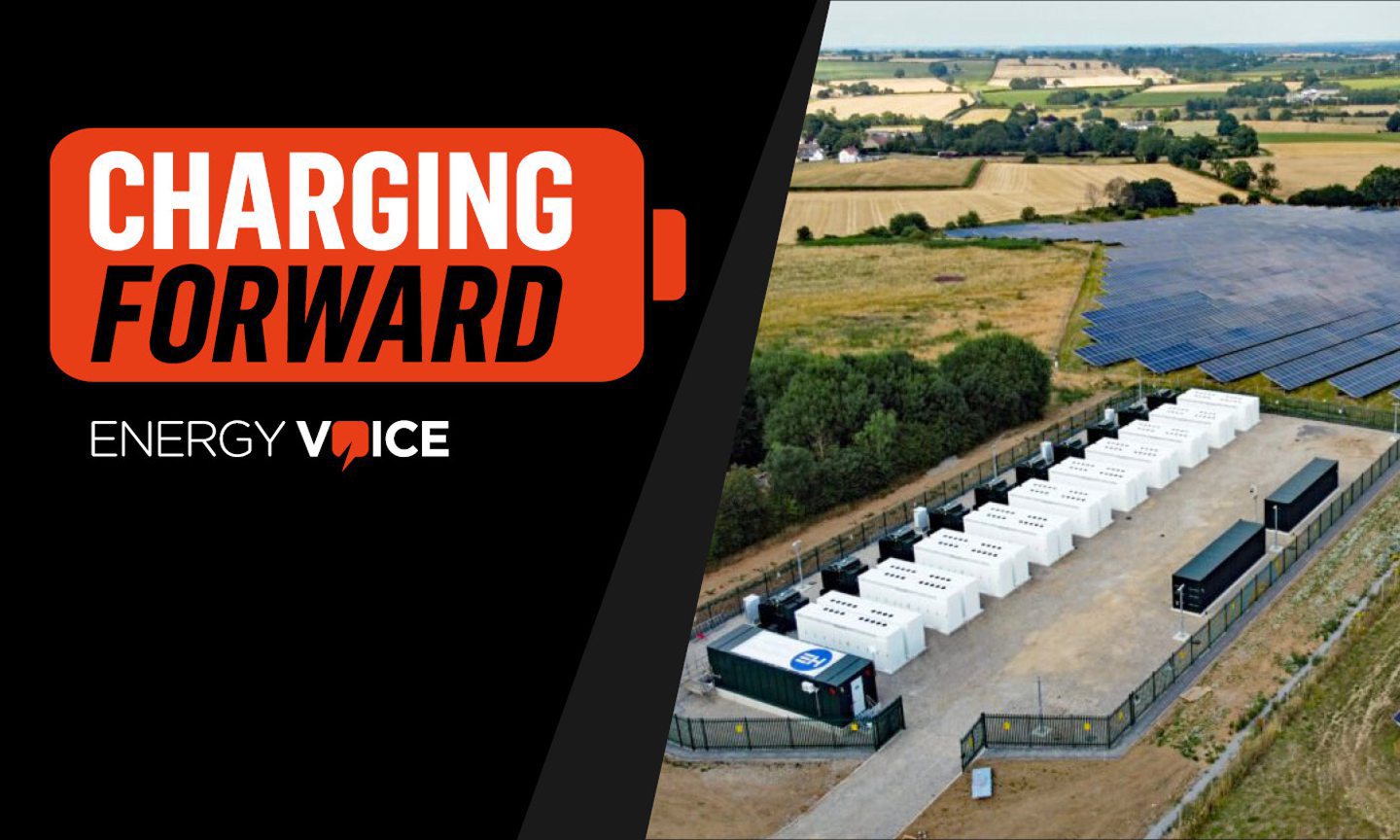
In this week’s Charging Forward, a 35MW/70MWh battery energy storage system (BESS) site in North Yorkshire was energised ahead of operation by Harmony Energy.
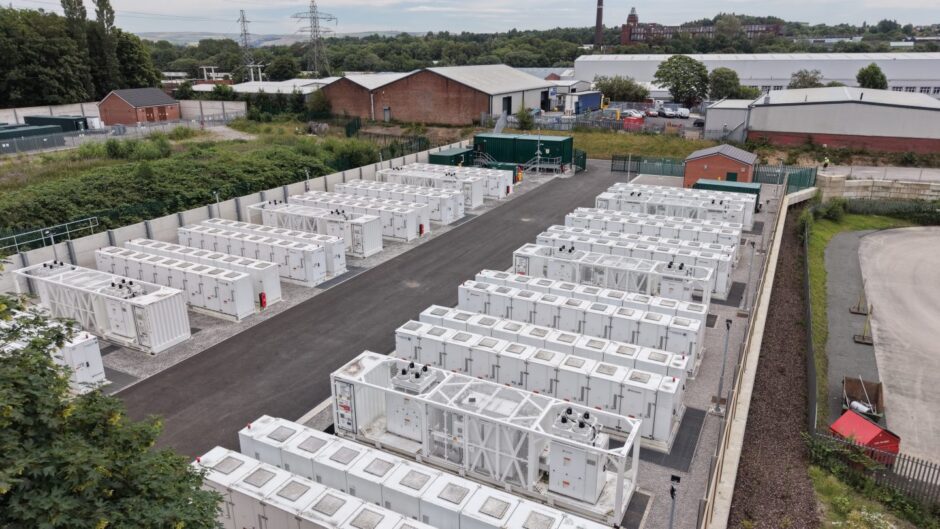
Elsewhere, Masdar began operating its second BESS site – opening its 35MW/70MWh Rochdale project, which will look to provide power for 35,000 homes per day.
At the heart of government, DESNZ pitched an idea – and cash – to build out 100-hour energy duration and expand hydrogen storage exploration. The department earmarked £28 million to do so.
On the international scene, Capital Dynamics has acquired a ready-to-build 170MW battery energy storage system project in County Kerry, Ireland.
The Week’s UK energy storage headlines
- Harmony Energy energises North Yorkshire BESS site
- Masdar expands BESS portfolio, opening Rochdale site
- Government sets out ambition for 100-plus hour long duration energy storage
- International energy storage news: Capital Dynamics acquires Irish 170MW battery energy storage system
Harmony Energy energises North Yorkshire BESS site
A 35MW/70MWh battery energy storage system now energised near Richmond, North Yorkshire.
Harmony Energy, owners and operators of utility-scale battery energy storage systems, has energised its Skeeby BESS, which uses Tesla Megapack technology.
When operational, it will store power from sources such as wind and solar and release it back to the grid when demand is high, enough to power around 120,000 homes for two hours.
The energisation of Skeeby also marks an important milestone for Harmony Energy following its recently announced strategic investment from Alpiq.
Skeeby is the first Harmony Energy site to go live since the investment was announced, as the firm looks to build on its momentum.
Harmony Energy chief executive Peter Kavanagh said: “That investment gives us additional backing to accelerate the delivery of projects like this across the UK and Europe, while continuing to operate with the same team, brand and development expertise that have underpinned Harmony Energy’s growth to date.”
Masdar expands BESS portfolio, opening Rochdale site
Masdar has opened a 35MW/70MWh BESS in Rochdale as it looks to push on with its battery drive.
Commercial operations begin at the Rochdale project, which provides clean power for 35,000 homes per day.
It comes as Masdar is “committed” to investing £1 billion to develop a 3GWh pipeline of storage projects in the UK.
The portfolio will play a “vital role in supporting the integration of renewables into the country’s energy mix and enhancing grid stability, to lower consumer bills”, a Masdar spokesperson explained.
The investment comes as the government looks to push on with its clean power 2030 action plan, which is targeting building up to 27GW of battery storage by the end of this decade.
Masdar executive director Husain Al Meer said: “As electricity demand grows and renewable generation continues to expand, battery storage is becoming an increasingly vital component of maintaining a secure, reliable and affordable electricity network.”
The Rochdale project follows Masdar’s 20MW/40MWh Welkin Road project in Stockport, which began commercial operations last December.
The company is also currently developing projects in Chesterfield and Cardiff, which will have a combined capacity of 150MW/300MWh.
Project financing for the four projects was completed last month, with Masdar securing up to £97 million from SMBC and ING.
Government sets out ambition for 100-plus hour long duration energy storage
The UK government has launched a £28 million fund to boost the development of ultra long duration energy storage (ultra-LDES).
The Department for Energy Security and Net Zero (DESNZ), alongside the UK Research and Innovation (UKRI), is looking to establish a network of storage technologies that can supply electricity for at least 100 hours.
In a statement, a DESNZ spokesperson said, “Reducing our reliance on natural gas will also bolster our energy security as a nation.
“While the gas system will still play an important role for decades to come, improved energy storage will be a vital part of the transition to clean, homegrown energy, which will shield us from the impacts of international supply chain issues.
“Laying the foundations for the move to clean energy is also a vital part of addressing the climate crisis, which is already being felt across the UK and around the world”.
The government expects ultra-long duration storage to allow excess renewable electricity to be stored during periods of high generation and dispatched when the system needs it and will rely on two main technology areas.
The first will look at developing new battery technologies capable of providing energy for over 100 hours.
These electrochemical technologies are yet to be commercialised at scale, “giving the UK an opportunity to secure an early foothold in the market”, according to the department.
The second will support the development and testing of systems which store hydrogen underground and release it when needed.
Capital Dynamics acquires Irish 170MW battery energy storage system
Capital Dynamics has scooped up what it calls a “ready-to-build” 170MW BESS site in Ireland.
The project received the green light from planners in October 2026 and will be among the first long duration site in Ireland.
 © Supplied by Capital Dynamics
Capital Dynamics senior managing director said: “At a time when renewable generation continues to grow, BESS projects are required to offer local businesses and communities an efficient and fast way to strengthen energy security and grid resilience.”
He added: “The Republic of Ireland represents one of the most compelling storage markets in Europe and combines a high and rising share of renewable generation with a clear policy commitment to decarbonise its grid.”
The project was acquired from a group of private shareholders. Capital Dynamics was advised by Pinsent Masons on the legal aspects of the takeover, Afry on the technical side and Mazars for financial advice.
Floyd March is North of England correspondent at Energy Voice. His specialisms include hydrogen, nuclear, and CCS – all with a close eye on how the UK is navigating the energy transition.
Got a story for Floyd? Get in touch here.