
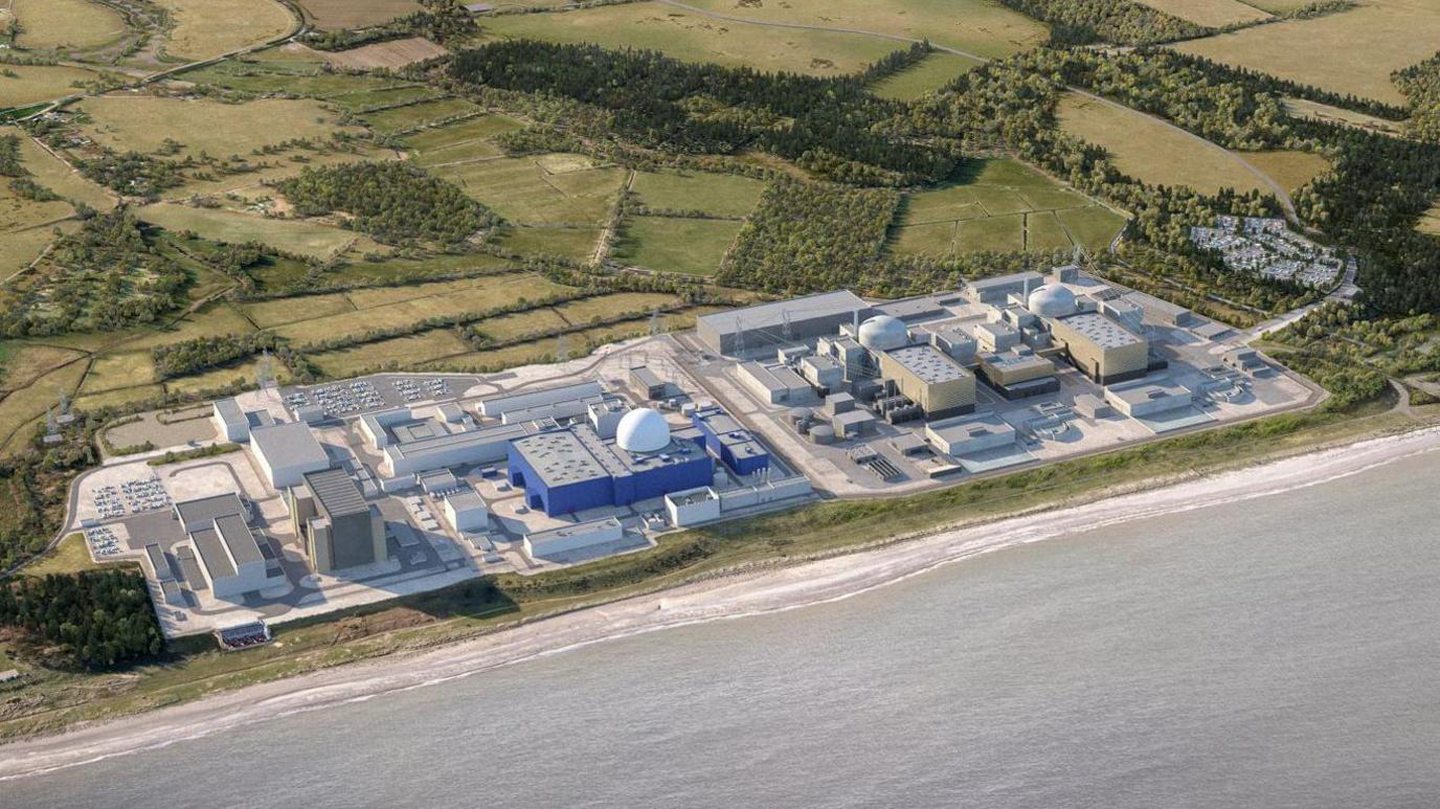
MPs have called for six-monthly reports on Sizewell C’s costs, construction progress and forecast investor returns, describing its financing arrangements as a “terrible deal” for the UK taxpayer.
Private investors in the Suffolk project will “cash in and leave taxpayers to foot the bill” under the agreement signed by the government last year, MPs on the public accounts committee (PAC) said.
In a report published Wednesday ahead of the Budget, the PAC called on the government to regularly outline key metrics such as costs, progress and expected funder profits.
In July 2025, ministers approved the project’s financing arrangements, with the government taking a 44.9% stake alongside EDF, Centrica, La Caisse and Amber Infrastructure. The Suffolk nuclear project is forecast to cost up to £48bn.
The National Wealth Fund is providing most of the project’s debt finance, alongside loans from commercial banks.
The scheme will be delivered using the regulated asset base (RAB) model, which requires customers to pay a fee added to their bills during the construction phase and share the risk of cost rises with investors.
By contrast, Hinkley Point C’s developers finance construction, with a contract for difference (CfD) supporting electricity revenues once the Somerset plant generates power.
“Sizewell C represents a terrible deal for the UK taxpayer,” the PAC report says.
“We are concerned that if costs rise above the baseline – and they are highly likely to – consumers will pay through higher bills while private investors face little risk to their capital and yet still expect high returns.”
The committee calculated that consumers could be hit with bills for almost £22bn if the cost of building the plant reached the £47.7bn “higher threshold” under the deal – while investors might only stump up an extra £30m.
Earlier this year, the National Audit Office (NAO) warned that investor incentives in the Sizewell C nuclear financing deal may be insufficient to deliver the cost savings needed to justify private involvement in the project.
Sizewell C construction set to finish by the summer of 2039.
Once complete, the 3.2 GW site could power the equivalent of six million UK homes and operate for 60 years.
The report comes as the UK embarks on a nuclear “golden age” with decisions on Sizewell C as well as small modular reactor (SMR) redevelopments at Wylfa in Wales, in an effort to deliver baseload to the UK’s increasingly intermittent renewable energy system.
Jack Green-Morgan, principal political consultant for energy, utilities and net zero at Dods Political Intelligence, warned the government should “acknowledge the risks associated with Sizewell C as they look at future developments”.
He added: “Ministers have talked about replicability in delivering nuclear generation as a way of bringing down costs.
“However, if the Sizewell C delivery model, as noted by the committee, is ‘a terrible deal for the taxpayer’, then future projects will likely need to rebalance the risks between taxpayers and investors, rather than replicate its terms.”
He pointed to plans for Great British Energy-Nuclear (GBE-N), the government’s energy company, to identify site for “a further large-scale nuclear power plant later this year” while also warning about the potential of decommissioning and clean up costs to spiral.
“The government’s liability for any shortfall on decommissioning funding represents a long-term risk for taxpayers. This could become a sizable cost in the future if the Sizewell C delivery model, and the risk of a shortfall in decommissioning funding, is replicated for additional projects.
“In the interim, avoiding major delivery cost overruns on Sizewell C – potentially costing the taxpayer up to £9.8bn during construction – is firmly in the Government’s interest, as it grapples with energy affordability, tight spending constraints, and a growing political discourse that a low-carbon power system will leave consumers paying more.”
Tom Greatrex, chief executive of the Nuclear Industry Association (NIA) trade body, said the power technology was needed for its reliability and argued it would be cost effective.
“Sizewell C will provide the equivalent of 6 million households’ electricity demand for at least 60 years – clean, reliable and constantly available power that will deliver electricity system savings of £2bn a year – and using a finance model which costs consumers less by attracting new private investment,” he said.
“Currently, the consumer is footing a bill of £2.8bn so far this year to manage a dysfunctional grid, paying both for wind to stop generating at some times, and for gas-powered backup at others. The only way to stop that escalation is with more baseload power, and international experience demonstrates the most cost-effective way to do that is by repeat building the same design. This is precisely what the UK is doing.”
Erikka Askeland is news editor at Energy Voice. She’s spent more than 20 years reporting and editing business news, with the last decade focused on the North Sea and the UK’s energy transition.
Got a story for Erikka? Get in touch here.