
Two years ago, a hardware shop owner near Kolhapur laughed when someone suggested installing solar panels on his building. He said the same thing many people used to say: “Too expensive. Too much headache.”
This year, he finally installed them.
The reason was not environmental activism or some government campaign. His monthly electricity bill had become difficult to manage during summer. Air conditioners, lights, storage equipment, and rising tariffs were putting pressure on the business.
That is how solar energy is transforming everyday life now. Quietly. Gradually. Mostly through practical reasons.
And this is happening in many places, not just India.
Electricity demand keeps increasing. Homes use more appliances than before. Offices depend on uninterrupted power. Data centers use massive amounts of electricity daily. Similarly, many countries are trying to reduce pollution and lower dependence on conventional fuel.
Solar energy fits naturally into that situation.
Not perfectly. Not without challenges. But enough to change the direction of the power industry.
Solar Energy Does Not Feel “New” Anymore
There was a time when solar panels looked unusual. People mostly saw them in advertisements, technology exhibitions, or luxury villas.
Now they appear almost everywhere.
Apartment buildings install them to reduce common electricity expenses. Factories use them during daytime operations. Schools, clinics, and warehouses are adding rooftop systems too.
One big reason is cost.
Years ago, installation prices scared many buyers away. Families worried they would spend too much money without real savings. Businesses questioned whether solar systems would actually help operations.
Then prices started dropping.
Large-scale manufacturing changed everything. China expanded production rapidly. Indian suppliers entered the market in bigger numbers. Installation companies became easier to find.
And slowly, solar systems became more affordable.
Government programs also encouraged adoption. Subsidies lowered initial expenses in several regions. Solar net metering policies help homeowners recover part of their electricity costs. They send extra power back into the grid.
People are experiencing changing weather patterns directly now. Heatwaves feel stronger. Summers last longer. Electricity usage is high during hotter months.
Traditional grids often struggle under that pressure.
Solar energy helps reduce part of the load during peak daytime hours.
That matters more than many people realize.
The Old Power Model Is Changing
For decades, electricity systems worked in a predictable way.
Huge power plants generated electricity. Consumers used it. Everything depended heavily on centralized infrastructure.
Solar energy is progressively interrupting that structure.
Now, a household rooftop panel produces some of its own electricity. Shopping complexes reduce daytime grid dependence. Industries use solar systems to minimise operational costs.
Electricity generation is becoming more distributed.
Community solar projects are growing too. In these systems, multiple homes or businesses share electricity generated from a common solar setup.
Meanwhile, fossil fuel dependence is slowly reducing in some markets.
Coal still plays a major source for producing electricity mainly in developing economies. But governments are investing more heavily in renewable energy because pollution concerns continue growing.
Utility companies noticed this shift as well.
Some power providers resisted rooftop solar systems earlier because they feared losing customers. These days, several utilities directly invest in solar farms and battery storage projects themselves.
The market pushed them to adapt.
Net metering also changed public perception. Once homeowners realized unused electricity could reduce future bills, solar systems started feeling more practical.
Not experimental.
Just useful.
Batteries Changed Public Confidence
For years, critics raised the same question about solar power.
“What happens after sunset?”
Fair concern.
Solar panels generate electricity mainly during daytime. But homes, hospitals, and businesses need electricity at night too.
Also Read : Solar panels benefit India’s healthcare
Battery storage systems helped answer that issue.
Modern batteries can store extra daytime electricity for later use. During outages, homes can still operate fans, lights, routers, or refrigerators without immediate grid supply.
Businesses benefit as well. Small shops avoid interruptions. Clinics protect temperature-sensitive medicines. Offices continue operating during short power failures.
Lithium-ion batteries improved consistently over recent years. They became smaller, more reliable, and more efficient.
At the same time, companies and researchers started exploring newer storage technologies. Solid-state batteries and flow batteries are receiving attention. They may improve long-term storage performance.
Microgrids are another growing trend.
Some villages across Africa and parts of Asia now use local solar-plus-storage systems instead of waiting for large national grid expansion projects.
And honestly, the impact becomes visible very quickly.
Children study longer after dark. Local stores stay open later. Small medical centers function more reliably.
Sometimes technology changes lives in ordinary ways first.
Solar Energy and Cleaner Cities
Pollution remains a serious issue in many urban regions.
Coal and gas plants release emissions during electricity generation. Solar systems operate differently because they generate electricity without burning fuel directly.
That helps reduce carbon emissions over time.
Several cities already face major air quality problems. Cleaner electricity systems alone cannot solve everything, but they can reduce pressure gradually.
There is another issue countries think about carefully now.
Fuel dependency.
Nations importing large quantities of coal, oil, or gas often face economic stress when global fuel prices rise suddenly. Solar energy offers more stability because sunlight is freely available.
Of course, solar equipment still requires manufacturing, transport, and industrial processing. No energy system is completely free from environmental impact.
But compared to older fossil fuel systems, solar power creates far lower pollution levels overall.
Why More People Keep Choosing Solar
For many families and businesses, the first reason remains simple.
Electricity costs money. Often a lot of it.
Factories, hotels, warehouses, and malls consume maximum power during daytime operations. Solar systems naturally support those working hours.
Homeowners look at solar differently now too.
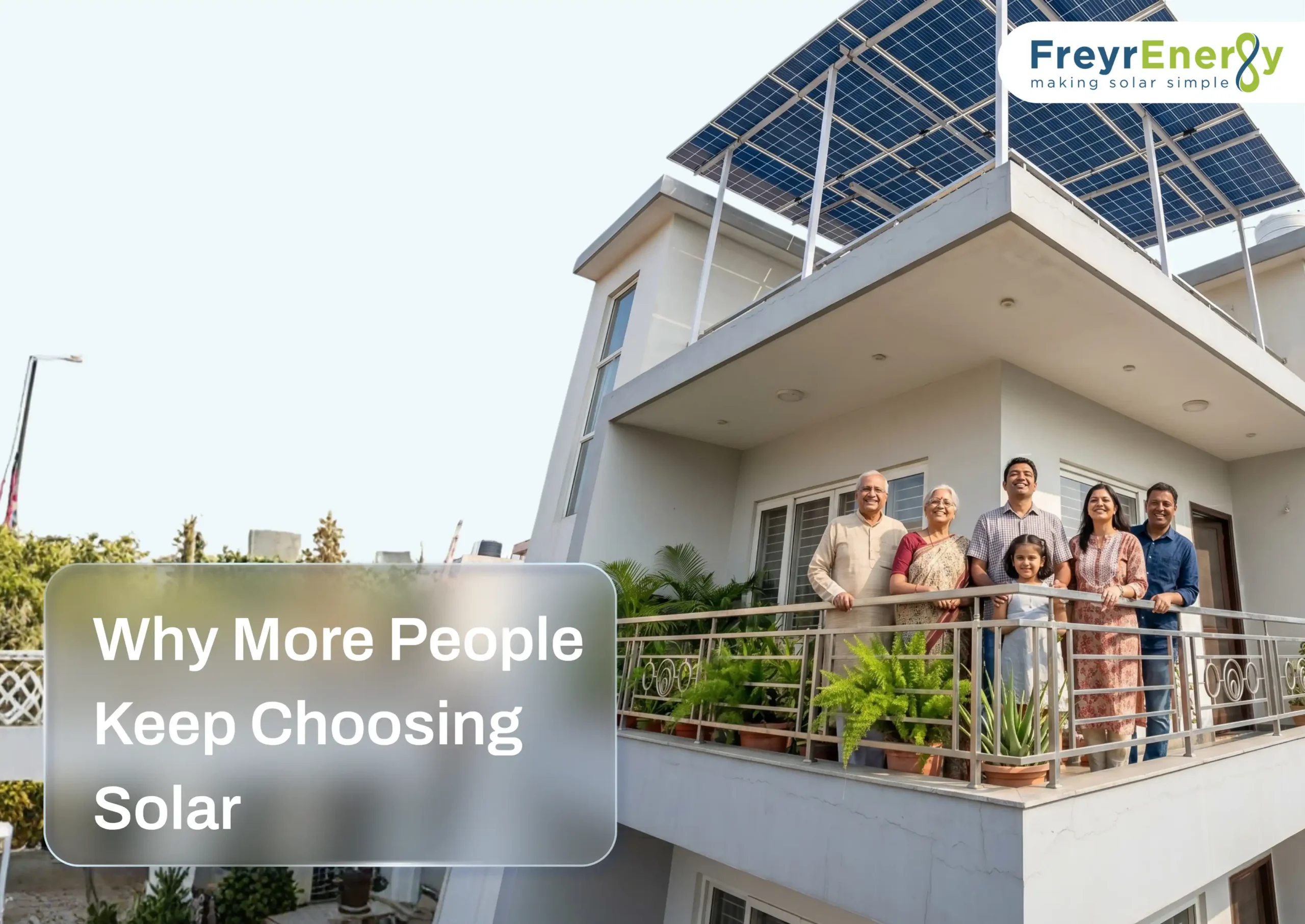
Initially, rooftop systems felt complicated. Today, many families see them as long-term investments that may reduce electricity bills over time.
Battery backup systems make them even more attractive in areas with frequent outages.
Businesses have another reason for shifting toward renewable energy.
Customers and investors increasingly notice environmental commitments. Companies promoting cleaner operations often build a stronger public image.
So financial benefits and sustainability goals are now moving together.
That combination is helping solar energy expand faster than earlier predictions.
Conclusion
Solar Energy is no longer on the verge of the global power industry. It is now a main source of electricity generation in homes, businesses, and public infrastructure.
In many countries, lower installation costs, growing demand for electricity, better battery systems and government support are speeding up this transition.
Challenges still exist. Storage technology requires further improvement, and electricity grids in several regions need modernization.
Even so, the larger direction looks fairly clear now.
The future energy market will depend more on cleaner and flexible systems. And solar energy will be one of the strongest drivers behind that transition well beyond 2026.